Waste Type

Lorem ipsum dolor sit amet, consectetur adipisicing elit, sed do eiusmod tempor incididunt ut labore et dolore magna aliqua. Ut enim ad minim veniam

Book a Skip

What Goes In the Skip?

We accept most household and commercial waste. Some items need special arrangements — check below.
General Waste

General Waste

Accepting the general waste including light domestic waste from home and offices that are permitted in general waste skip bins

View More
Green Waste

Green Waste

Waste with 100% green waste that includes small trees, branches, shrubs, grass, grass clippings, wings, and palm fronds

View More
Mixed Waste

Mixed Waste

Which means by hiring our skip bin Brisbane services, you help in making a cleaner and greener future.

View More
Soil & Dirt

Soil & Dirt

Which means by hiring our skip bin Brisbane services, you help in making a cleaner and greener future.

View More

Need a Bin? Get a Quick Quote in Minutes.

Hire a skip bin with Affordable Skips Bins for affordable, hassle-free service.
bin container
Waste Type Acceptable Items Non-Acceptable Items
General Waste
  • Household rubbish
  • Furniture & mattresses
  • Cardboard & packaging materials
  • Plastics & wrapping waste
  • Paper & office waste
  • Wood, timber & plywood
  • Light renovation debris
  • Clothes, fabrics & soft furnishings
  • Toys, broken items & general clutter
  • Asbestos or hazardous materials
  • Chemicals, oils & liquid waste
  • Cardboard & packaging materials
  • Paint, solvents & fuel
  • Batteries & electronic waste (e-waste)
  • Gas cylinders & pressurised containers
  • Medical & biohazard waste
  • Food & organic waste
  • Concrete, soil, bricks & heavy rubble
Green Waste
  • Household rubbish
  • Furniture & mattresses
  • Cardboard & packaging materials
  • Plastics & wrapping waste
  • Paper & office waste
  • Wood, timber & plywood
  • Light renovation debris
  • Clothes, fabrics & soft furnishings
  • Toys, broken items & general clutter
  • Asbestos or hazardous materials
  • Chemicals, oils & liquid waste
  • Cardboard & packaging materials
  • Paint, solvents & fuel
  • Batteries & electronic waste (e-waste)
  • Gas cylinders & pressurised containers
  • Medical & biohazard waste
  • Food & organic waste
  • Concrete, soil, bricks & heavy rubble
Mixed Waste
  • Household rubbish
  • Furniture & mattresses
  • Cardboard & packaging materials
  • Plastics & wrapping waste
  • Paper & office waste
  • Wood, timber & plywood
  • Light renovation debris
  • Clothes, fabrics & soft furnishings
  • Toys, broken items & general clutter
  • Asbestos or hazardous materials
  • Chemicals, oils & liquid waste
  • Cardboard & packaging materials
  • Paint, solvents & fuel
  • Batteries & electronic waste (e-waste)
  • Gas cylinders & pressurised containers
  • Medical & biohazard waste
  • Food & organic waste
  • Concrete, soil, bricks & heavy rubble
Soil & Dirt
  • Household rubbish
  • Furniture & mattresses
  • Cardboard & packaging materials
  • Plastics & wrapping waste
  • Paper & office waste
  • Wood, timber & plywood
  • Light renovation debris
  • Clothes, fabrics & soft furnishings
  • Toys, broken items & general clutter
  • Asbestos or hazardous materials
  • Chemicals, oils & liquid waste
  • Cardboard & packaging materials
  • Paint, solvents & fuel
  • Batteries & electronic waste (e-waste)
  • Gas cylinders & pressurised containers
  • Medical & biohazard waste
  • Food & organic waste
  • Concrete, soil, bricks & heavy rubble

Know your waste

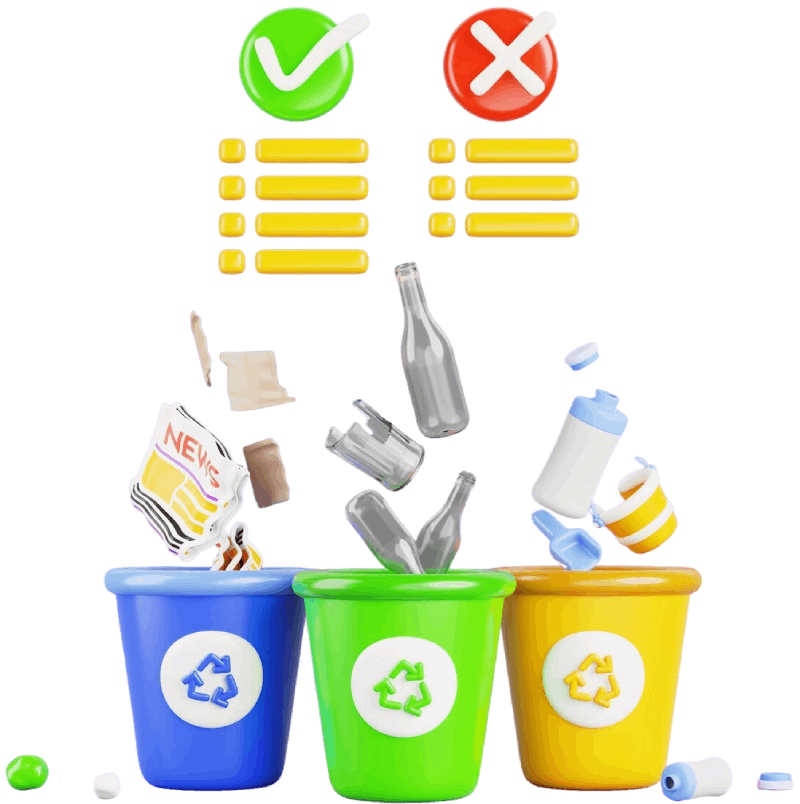
Australia generates over 75 million tonnes of solid waste annually—roughly 2.88 tonnes per capita—with a 58% recycling rate, yet relies heavily on landfills. Key waste streams include construction and demolition 44%, organics 19%, and hazardous materials.
fact

Australia generates over 75 million tonnes of solid waste annually—roughly 2.88 tonnes per capita—with a 58% recycling rate, yet relies heavily on landfills. Key waste streams include construction and demolition 44%, organics 19%, and hazardous materials.
  • icon
    Aluminium recycling saves 95% of energy

    Recycling one aluminium can uses 5% of the energy required to produce one from raw bauxite ore.

  • icon
    Tasmania's single-use plastics ban

    Cutlery, plates, straws and polystyrene cups have been phased out in commercial use under DEPHA Tasmania's 2022 reforms.
  • icon
    Australia's 2030 target — 80% diversion

    The National Waste Policy Action Plan commits Australia to an 80% average resource recovery rate from all waste streams by 2030.

Ready to book your skip bin?

Whether you’re a homeowner or a contractor, our blog has you covered. Read practical guides and learn how to simplify your bin hire experience.